
Posts sobre David Fincher

A perfeição de Zodíaco

Emily St. James, Episodes:

The comfort in Zodiac is the comfort of doomerism, the idea that we are completely fucked, and it’s better to just admit it. The only people who matter are the monsters in the shadows who’ve broken the world and the people sitting right in front of you, who might be able to help you shine what meager light you possess into those shadows.

[…]

The kind of light dehumanization that peppers the edges of Zodiac’s frames is something we all practice from time to time. When you are engaged in a really intense conversation in a restaurant, the server might become an abstraction to you. You’re aware they’re there, but you’re also really locked in on what you and your friend are chatting about. This filtering of the world is normal, even healthy. Our brains have to shut out some information to make sense of what’s important to us in that moment.

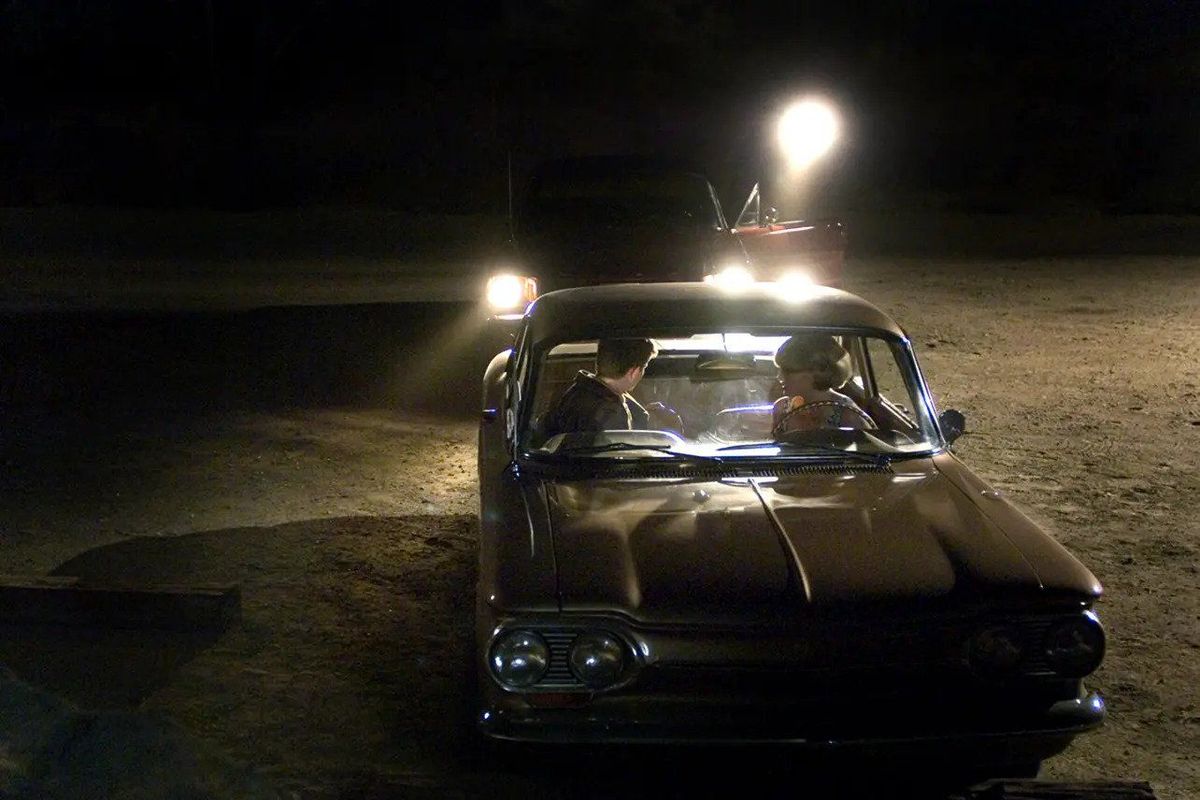
Yet watch Zodiac again with an eye toward how Fincher utilizes this technique. The longer the movie goes on, the more other people only seem to exist as disconnected blobs in the background somewhere. The second you start to really look at them, you might start to think they mean to do something horrible to you. So you learn not to see them, and the world becomes a collection of scary stories waiting to happen.
O Assassino é “sigma cinema”

Max Read:

The killer thinks of himself as having an unmatched clarity about his life and the world, but the movie mostly regards him as self-deluded. He botches his hits, he forms attachments, he misunderstands his own importance. Rather than being freed by his careful planning and elaborately articulated life philosophy, he’s trapped by his own paranoias and resentments.

“The killer as sigma male” is obviously not the only way to read this movie; as suggested in the footnotes you could see it as an personal story about a fastidious craftsman learning his own limits, or also a movie about how annoying work is, especially as a contractor. (To quote the killer’s favorite band: “this position I’ve held/It pays my way and it corrodes my soul.”)

But I like the sigma male reading because it reminds us that throughout his career Fincher has been in dialogue with the concerns of 4chan and the rest of Loser Internet

To be clear, I don’t think that Fincher is endorsing these ideas, specifically–except for goth gf–just that he’s interested in exploring them and the kinds of characters who believe them.What’s particularly interesting for such an internet-y set of ideas is that Fincher doesn’t really make movies “about” the internet–even The Social Network was a lot more about ambition, sociopathy, and freak loners than it was about “the internet,” per se. Instead, he made a body of work around a set of broad social (and gender) anxieties that have been particularly shaped by digital culture.

More to the point, it reminds us that the killer and his sociopathic boorishness live in the same tech-wrecked world as the rest of us.

What we get instead of “action,” it turns out, is a lot of travel and logistical work, which suggests that the funniest way to read the movie is “autobiographically”: it is, after all, roughly two hours of an meticulous and obsessive freak planning and executing a tightly scheduled multi-city production.