Posts sobre citações

Encontre sentido

“Find meaning. Distinguish melancholy from sadness. Go out for a walk. It doesn’t have to be a romantic walk in the park, spring at its most spectacular moment, flowers and smells and outstanding poetical imagery smoothly transferring you into another world. It doesn’t have to be a walk during which you’ll have multiple life epiphanies and discover meanings no other brain ever managed to encounter. Do not be afraid of spending quality time by yourself. Find meaning or don’t find meaning but “steal” some time and give it freely and exclusively to your own self. Opt for privacy and solitude. That doesn’t make you antisocial or cause you to reject the rest of the world. But you need to breathe. And you need to be.”

— Albert Camus em seus cadernos, 1951-1959.

As semelhanças entre sua vida e um cachorro

I never intended to have this life, believe me—
It just happened. You know how dogs turn up
At a farm, and they wag but can’t explain.

It’s good if you can accept your life—you’ll notice
Your face has become deranged trying to adjust
To it. Your face thought your life would look

Like your bedroom mirror when you were ten.
That was a clear river touched by mountain wind.
Even your parents can’t believe how much you’ve changed.

Sparrows in winter, if you’ve ever held one, all feathers,
Burst out of your hand with a fiery glee.
You see them later in hedges. Teachers praise you,

But you can’t quite get back to the winter sparrow.
Your life is a dog. He’s been hungry for miles,
Doesn’t particularly like you, but gives up, and comes in.

— Richard Bly, “The Resemblance Between Your Life and a Dog” (via Laura Olin)

Um obituário para o metaverso

Nick Heer é um dos melhores autores que observam a tecnologia. Ele sempre tem opiniões muito bem embasadas que, mesmo quando eu não concordo completamente, me fazem ponderar e reconsiderar minhas certezas. No seu blog Pixel Envy, ele publicou recentemente o que eu acho que é o melhor obituário possível para o metaverso, e as loucuras que empresas como o Facebook, a Epic Games e Roblox fizeram (sem falar projetos como o Decentraland):

It turns out we are okay with having meetings and playing games online, but we actually like seeing live music in-person and travelling to real places. The problems each of these things may have — high costs, environmental impact, and so on — are notable and real, but are not ones with metaverse-based solutions.

The pandemic did not make the metaverse. There was sufficient interest in developing it well before then, and it is possible all of these companies would have announced all these products and services on the same timeline. But in a world without a pandemic, I cannot imagine anyone would have treated these metaverse announcements with anything like the seriousness they did. The pandemic officially ended in the U.S. just six months after the first release of ChatGPT, so it is impossible to disentangle the influence of either. But it is notable to me that the nosedive in mentions of “metaverse” on Meta’s investor calls occurred in Q3 2023 — the quarter immediately following the declared end of the pandemic.

Ele ainda termina com um toque quase esperançoso. Dá pra ver que Heer cresceu vendo a internet florescer. Esse tipo de otimismo é de quem viu protocolos e tecnologias sendo criadas na nossa frente no início da internet:

[…] Whatever that ends up being will probably be the result of people finding something useful and intriguing about doing something different. It will not be the product of big companies redirecting the money hose of platform fees onto themselves.

Recomendo muito o Pixel Envy. É uma ótima leitura toda a manhã.

Três coisas sobre dados

Russel Davies escreveu um texto bem interessante sobre a “soberania dos dados” que parece ser a ruína de muitas empresas (undermanager). Alguns destaques da leitura.

Na introdução ele já elenca o paradoxo que é coletar dados para descobrir o motivo dos negócios não irem bem, e’quando os dados não respondem a pergunta você acaba coletando mais dados, o que te afastam ainda mais de procurar a resposta no lugar certo:

a. Data is a risk. Every bit of data has to be managed/looked after/cared for. That costs time and money. And most of it is useless.

b. Data is distracting. Most of it is just noise. You’re gathering it because you can, just in case, because it seems valuable. Then you spend ages trying to work out what to do with it. When you should be paying attention to just a couple of bits of it and actually doing something about it.

c. It becomes a job. Get enough data and you need data scientists. Then you’re stuck in a self-perpetuating structure that requires more data to feed the data scientists.

E, sobre a distância dos dados reais das pessoas que precisam deles:

The more it gets abstracted away to other teams and other softwares the more dangerous and misleading it gets.

Tem várias vezes na semana que eu me pego pensando que eu sou um incompetente no trabalho porque eu recebo dados do negócio fornecidos por outras pessoas que acham que teria alguma relevância pro meu trabalho, e eu não ver serventia nenhuma naquela informação. É muito frustrante receber informações que te dão ideia de um detalhe muito específico de uma parte da audiência e perder a visão do todo. Eu não desenvolvo pra um setor específico das pessoas que vão visitar um site. Eu desenvolvo pra todas as pessoas que possam visitar um site.

Long Grass

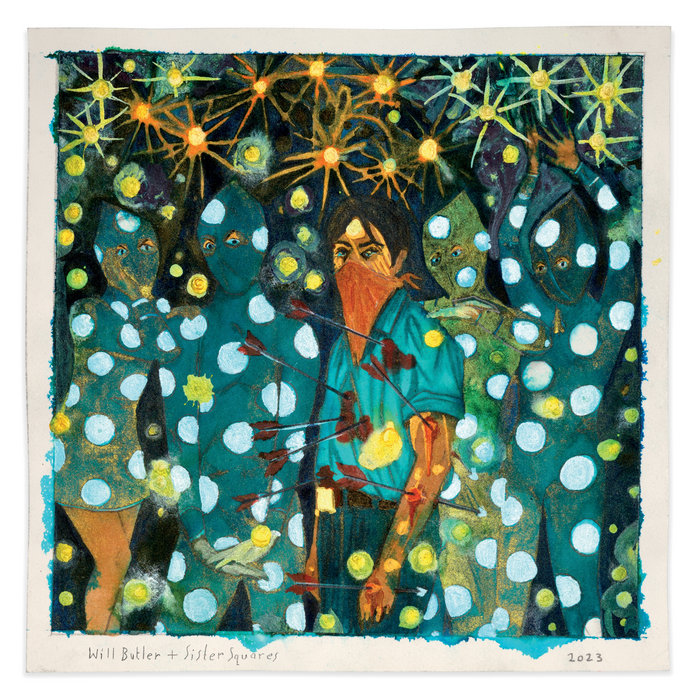
Do álbum Will Butler + The Sister Squares:

In the long grass, in the long grass
By the train tracks, by the train tracks
Waiting with nothing in my hands
Losing your voicе against the wind
Across my face the flow of timе
My shadow slowly fill the night
I found it fading in my mind
The final place I feel alive
Let me stay, let me stay, let me stay
Oh, let me stay here

Software simples

Eu tô tentando zerar minha lista de leitura. Ela tem 209 links para ler, catalogar e arquivar. Pra me forçar a ler um pouco todo o dia, vou começar a postar aqui o que eu estou lendo, e talvez um comentário ou destaques.

Hoje, foi TextEdit and the Relief of Simple Software, no The New Yorker.

Kyle Chayka:

Amid the accelerating automation of our computers—and the proliferation of assistants and companions and agents designed to execute tasks for us—I’ve been thinking more about the desktop that’s hidden in the background of the laptop I use every day. […]

Over the past few years, I’ve found myself relying on TextEdit more as every other app has grown more complicated, adding cloud uploads, collaborative editing, and now generative A.I. TextEdit is not connected to the internet, like Google Docs. It is not part of a larger suite of workplace software, like Microsoft Word. You can write in TextEdit, and you can format your writing with a bare minimum of fonts and styling. Those files are stored as RTFs (short for rich-text format), one step up from the most basic TXT file.

I trust in TextEdit. It doesn’t redesign its interface without warning, the way Spotify does; it doesn’t hawk new features, and it doesn’t demand I update the app every other week, as Google Chrome does. […] Each encourages you to adapt to a certain philosophy of organization, with its own formats and filing systems. But nothing has served me better than the brute simplicity of TextEdit, which doesn’t try to help you at all with the process of thinking. Using the app is the closest you can get to writing longhand on a screen. I could make lists on actual paper, of course, but I’ve also found that my brain has been so irredeemably warped by keyboards that I can only really get my thoughts down by typing […]

We users have learned that cloud-based apps and digital platforms are more likely to surveil us, mine our data, and manipulate our attention than to provide us the precise content and services we seek […]

Acho que esse relato de como Chayka usa o editor de texto (e como interage com um desktop) me ajudou a entender porque eu acho que nenhum outro dispositivo — celular, tablet, nada disso — consegue capturar: a ideia de que o computador é uma “bicicleta para a mente”. Usar programas que lidam com arquivos, que nos pedem para organizar e catalogar eles nos fazem pensar na nossa própria organização — eles nos deixam responsáveis pelo nosso próprio pensamento, pela forma como estruturamos ele e a forma que criamos sentido.

Um celular, ao contrário, quer moldar sua organização para a abordagem de um app específico. Olha como a gente adapta nossos pensamentos para as limitações do app de notas que usamos, por exemplo, ou como as limitações na hora de organizar a tela de início de um celular não nos permite criar sentido na forma que operamos o dispositivo, diferente de como organizamos (ou não organizamos) nossa área de trabalho no computador.

Comunidades fortes e pessoas agindo com alegria

Via swissmiss:

Authoritarians cannot rise if there are strong communities and people are acting with joy. That is, you need despair and anger in order for an authoritarian to rise. Whatever those things are that you bring to the community, do them and do them with joy, and don’t stop doing the things you love because you’re scared, because that actually is a form of resistance.

— Heather Cox Richardson.

John Gruber sobre a existência dos cinemas

John Gruber, no Daring Fireball, comentando sobre a compra da Warner Bros. pelo Netflix:

The LA Times article goes on to cite concerns from the movie theater industry, based on Netflix’s historic antipathy toward theatrical releases for its films. Netflix is promising to keep Warner Bros.’s film studio a separate operation, maintaining the studio’s current support for theatrical releases. I hope they do. I grew up loving going to the movies. I still enjoy it, but the truth is I go far less often as the years go on. Movie theaters shouldn’t be a protected class of business just because there’s so much affection and nostalgia for them. If they continue sliding into irrelevance, so be it. That’s how disruption, progress, and competition work.

Eu acho tristíssima essa observação, porque ignora o aspecto cultural do cinema como um espaço de comunidade, de acesso à arte na forma mais apropriada pra experimentar ela. Se eu posso ver um filme no Netflix, e o Netflix faz mais dinheiro que uma sala de cinema, o Netflix é mais bem sucedido em exibir aquele filme? É como argumentar que, agora que eu posso olhar pra Mona Lisa na Wikipédia, o Louvre não tem mais razão de existir.

Você e seus amigos blogando

altered0:

something about how informal blogs sometimes work like diaries but better because you don’t get as overexcited and stressed about starting a whole new thick book you have to fill up nicely. instead it’s just you and your friends and you’re all in this infinite world together and it’s never empty and never full and you can add whatever you’d like to it

Faça alguma coisa

If you want to make a game, just make something, anything is fine. Don’t make something too big, just complete something small that’s playable. Even if you encounter difficulties, solve them through research and ingenuity. Make adjustments to make it more enjoyable. If possible, have others play it and see their reaction. Make several games, this steady repetition builds the foundation and deepens your understanding.

I think that what I think is fun about playing a game or moving is a training in life. There may be no waste of anything that feels fun.

— Masahiro Sakurai, via nintendocafe

Ann Druyan comenta sobre seu tempo com Carl Sagan

Ann Druyan na Skeptical Inquirer em 2003 (via oncewild no Tumblr):

“When my husband died, because he was so famous and known for not being a believer, many people would come up to me – it still sometimes happens – and ask me if Carl changed at the end and converted to a belief in an afterlife. They also frequently ask me if I think I will see him again. Carl faced his death with unflagging courage and never sought refuge in illusions. The tragedy was that we knew we would never see each other again. I don’t ever expect to be reunited with Carl. But the great thing is that when we were together, for nearly twenty years, we lived with a vivid appreciation of how brief and precious life is. We never trivialized the meaning of death by pretending it was anything other than a final parting. Every single moment that we were alive and we were together was miraculous – not miraculous in the sense of inexplicable or supernatural. We knew we were beneficiaries of chance… That pure chance could be so generous and so kind… That we could find each other, as Carl wrote so beautifully in Cosmos, you know, in the vastness of space and the immensity of time… That we could be together for twenty years. That is something which sustains me and it’s much more meaningful… The way he treated me and the way I treated him, the way we took care of each other and our family, while he lived.

That is so much more important than the idea I will see him someday.

I don’t think I’ll ever see Carl again. But I saw him. We saw each other. We found each other in the cosmos, and that was wonderful.”

“Oi, sou eu, Wikipédia, e eu estou pronta para seu pedido de desculpas”

Wikipédia, provavelmente:

Tell me, how have you guardians of facts been doing recently? (See also: Techno-Feudalist Infocide.)

Maybe twenty years ago, the alternative to my 100,000 crowd-sourced editors was a PhD expert, or Edward R. Murrow [citation needed]. But today, I’m not looking so bad, huh? Absolute best case, the LLM-generated legal advice you get is merely plagiarizing, probably from me. But more likely, it’s a mish-mash of Reddit posts filtered through an algorithm coded by a Belarusian teenager on the run from Interpol. (See also:Illya “CyberGhost” Cieraškovič, Controversies.)

Perfeito. Você pode doar para a Wikipédia.

Happiness

So early it’s still almost dark out.
I’m near the window with coffee,
and the usual early morning stuff
that passes for thought.
When I see the boy and his friend
walking up the road
to deliver the newspaper.
They wear caps and sweaters,
and one boy has a bag over his shoulder.
They are so happy
they aren’t saying anything, these boys.
I think if they could, they would take
each other’s arm.
It’s early in the morning,
and they are doing this thing together.
They come on, slowly.
The sky is taking on light,
though the moon still hangs pale over the water.
Such beauty that for a minute
death and ambition, even love,
doesn’t enter into this.
Happiness. It comes on
unexpectedly. And goes beyond, really,
any early morning talk about it.

— Raymond Carver

The Leftovers é uma das melhores séries de TV já feitas

Emily St. James, para a Vox:

[…] But the feeling [of needing a life change] The Leftovers had evoked in me persisted. I was satisfied, full up on the show’s particular blend of sorrow and joy. I was convinced that if I never see another TV show I felt as passionately about, well, that would be okay, because I’d had The Leftovers.

Pop culture functions as a kind of subconscious for what humans care about. That’s why I find it so fascinating to watch it fluctuate and change, to observe how it both is molded by our shifting social codes and actively molds them.

[…] everybody’s subconscious is a little bit different, and a meaning I ascribe to something may not be a meaning you would ascribe to it at all […] So I always think of that meaning as a little door in the back of the work. You watch the TV show or the movie, or listen to the album, or whatever, and you can talk about the work itself — the plot elements and images and directorial choices that go into making it.

But always, in the back, there’s a door to everything else, all of the cultural forces and psychological implications and deeper meanings you can find if you go digging. Open the door a little bit, and you might take a peek at those things. Throw it open wide, and you reveal just as much about yourself and what you value as you do the work itself.

What made The Leftovers special — and what most of my favorite TV shows have in common, come to think of it — is that it forced you to open that door and leave it that way permanently.

[…]

The Leftovers, then, is the first TV show I can think of that actively engages with a world where the uncertainty that is core to simply being alive has caused a lot of us to carve out our own completely separate experiences of reality […]

[…] much of existence is basically random, meaningless, and out of our control. What do you do when you’re confronted with that fact?

Well, you start trying to rationalize. You try to put a narrative on what happened. You find an explanation, whether scientific or religious or something else altogether, and you try to fill in the gap between your need for control and your complete and utter powerlessness

[…]

Everybody alive can relate to the feeling of wanting to be in charge of our lives, only to realize that the systems that surround us are waiting to idly flick a fingernail and send us ricocheting through the rapids of chance.

And yet as the show progressed deeper into its run, it became, for me, maybe the most optimistic show on television, because it stared into uncertainty, into darkness, and insisted that we would figure out how to make our own light if we found ourselves stranded.

The series doesn’t focus on bringing its plot to a conclusion; instead, it concentrates on guiding its characters toward wholeness, if not happiness. They might remain deeply sad, or frustrated, or angry, but they are allowed a moment of kindness or gratitude, a moment that pushes them to extend the same to others. If life is meaningless, if nothing has a purpose, then all we have is what we can give to each other. I can’t think of many messages more optimistic, or necessary, than that.

We have made it to the future, and it’s trying to kill us. But it’s also always the future, and life is always trying to kill us. The world is always ending, but it’s also always beginning.

Struggling against the meaningless nature of life is important, but so is remembering that meaning is what we make of it and that we can create meaning for each other. The Leftovers worked so well because it focused not on the flood, but on the Ark, on the people left aboard, watching the skies for a sign of something new. There’s all this water, all around us — but look at us, lucky us, we have a boat.


A internet é um grande jogo

Spencer Chang, em sua newsletter:

I like newsletters that feel more like dispatches than editorialized posts. Inspired by Laurel and Robin, I’d like to share a little bit about where I am and where I’ve been lately.
[…]
The world manages to find a way to strike you with the most indescribable beauty when you need it most.
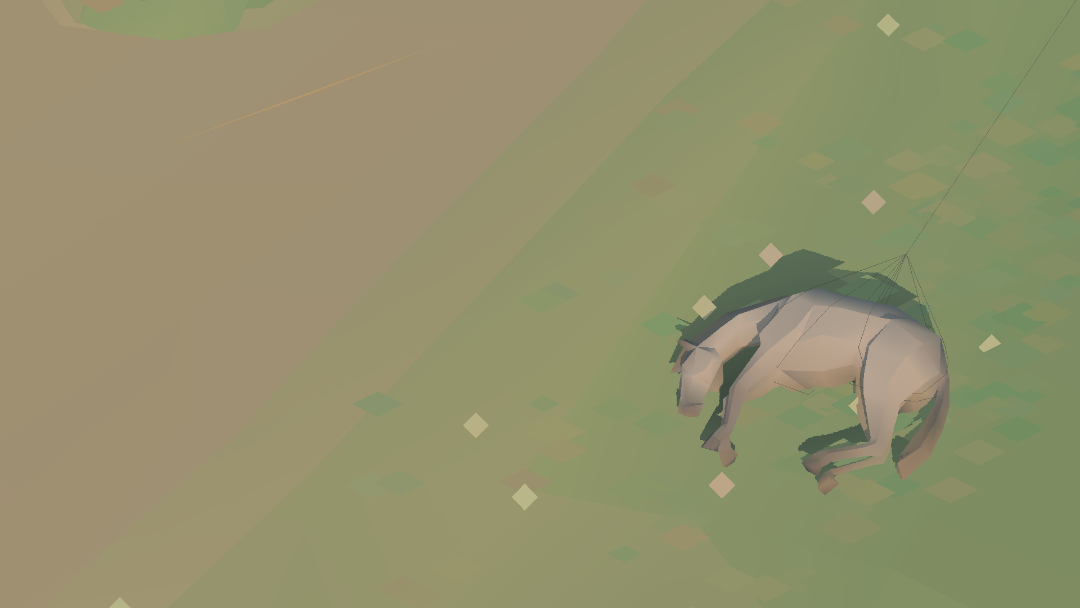
[…]
Websites are the future of video games.
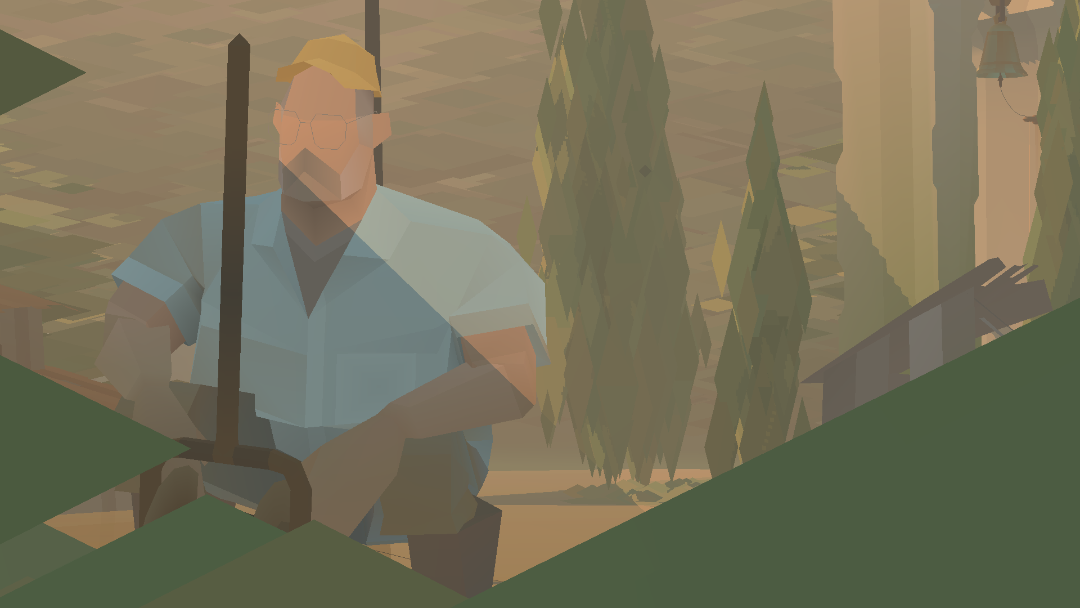
They are the “end game” of video games. They are spaces where the end players (the website visitors) have the agency to freely interact with others, and not towards any predetermined object, but purely for themselves, discovering who they are in each new environment and finding new ways of relating to one another.

Somewhere in the push to make the internet the infrastructure of a global capitalist economy, we lost this perspective on what the internet is. If I asked people to define what websites are to them, they might talk about the capabilities they provide: “the world’s information at your fingertips,” “AI that does whatever you ask of it,” “a platform for selling products.” Or as design artifacts: they provide the basis of interactive, creative pieces of art, media, and writing.

But if we distill a website down to its base components, it is a space that allows people to talk to each other. In the era when the internet was new and before we had predetermined what it was “for,” everyday internet pioneers found ways to talk to one another by making websites for each other.

WWW

Jason Kottke, citando um diálogo nos momentos finais de Halt & Catch Fire:

Joe: How did we all get here today? The choices we made? The sheer force of our wills, something like that? Here’s another answer: the winds of fate, random coincidence, some unseen hand pushing us along. Destiny. How did we all get here today? We walked through this door. We don’t have to build a big white box or stadium or invent rock n’ roll. The moment we decide what the Web is, we’ve lost. The moment we try to tell people what to do with it, we’ve lost. All we have to do is build a door and let them inside.

When I was five, my mother took me to the city. And we went through the Holland Tunnel and it was basic, concrete and steel, but it was also my excitement sitting in the backseat, wondering when it was going to be our turn to emerge, it was the explosion of sunlight. And when we exited the tunnel, all of Manhattan was laid out before us. And that was the best part of the trip: the amazing possibility to be able to go anywhere within something that is magnificent and never-ending.

This is the first Web browser, the one CERN built to view and edit research. I wrote it up here for you to see how simple it is. It takes up one whiteboard — that’s basic concrete and steel — but we can take this and we can build a door and we can be the first ones to do it because right now, everyone else sees this…

Donna: …as an online research catalog…

Gordon: …running on NeXT…

Cameron: …on a network in Europe.

Joe: And with this handful of code, we can build the Holland Tunnel.

Essa é uma das melhores traduções da linda possibilidade do que é um navegador, e o que é, em si, navegar na internet.

Kottke:

But the open Web enthusiasts and advocates missed an opportunity to take what the Web was in the 90s and make that available to everyone. Instead of walled gardens like Facebook, Pinterest, and Medium (which echo the closed online services like AOL, Prodigy, and Compuserve that predated the Web), imagine a bunch of smaller services bound together with open protocols where individuals have both freedom and convenience. […] I hope I’m wrong, but with all of the entrenched incumbents and money pumping into online services, I’m afraid that time has truly passed. And it’s breaking my heart.

A web quieta

Brian Koberlein, em seu blog:

The quiet filter isn’t perfect. There are plenty of quiet sites that use Google Analytics just because it’s an easy way to see if anyone is reading. And some sites pass the test while still having a bombastic style. But the filter does reveal hidden treasures. Sites that are thoughtfully and personally written. There’s often intentionality to them that is refreshing to read. I find my own ideas are challenged more on these sites, and that’s a good thing.

The biggest downside of the quiet web is that it can be difficult to find. You can’t simply Google topics of interest. Instead, you have to dig a bit. Go down rabbit holes until you come across an interesting quiet page. It takes time and effort. It’s easier just to doomscroll on Twitter. But the effort is worthwhile. As you gather more of the quiet web into your readership, you will notice the negative effects of the traditional loud web more. And once you get used to the quiet web, you may never want to go back.

Sobre sites pessoais e a web social

Manuel Moreale, em seu blog:

I still believe the first approach is doomed to fail. Because the issue with social media is not the tech, but the people. If you let enough people congregate in the same space some issues will inevitably arise. Grifters are gonna grift, scammers will try to scam, hustlers will hustle, influencers are gonna try to influence, and business people will try to monetise everything. It’s no surprise that Meta is slowly entering that space with Threads. And I don’t see Meta starting a blog platform next, letting everyone share and connect via RSS. So that alone tells me which approach is more appealing to the exact same entities we’re trying to get away from.

Having said that I’m hopeful. I do think people are slowly starting to realise that you can get immense human value from the web outside of traditional social media. You have to work for it but it’s absolutely worth it.

Porque escolher a web como uma plataforma de jogos

Brandon Dillon, 2weeks:

It’s an exciting time to be working in the space. After a long quiet period following the death of Flash, there are fewer and fewer technical barriers to making great games on the web.

The web can be a really vibrant space for games (as it once was). To make it vibrant, people need better tools. We should have a game development toolkit tailored to the web, and Tweaks can be that toolkit.

Whelks

Here are the perfect
fans of the scallops,
quahogs, and weedy mussels
still holding their orange fruit –
and here are the whelks –
whirlwinds,
each the size of a fist,
but always cracked and broken –
clearly they have been traveling
under the sky-blue waves
for a long time.
All my life
I have been restless –
I have felt there is something
more wonderful than gloss –
than wholeness –
than staying at home.
I have not been sure what it is.
But every morning on the wide shore
I pass what is perfect and shining
to look for the whelks, whose edges
have rubbed so long against the world
they have snapped and crumbled –
they have almost vanished,
with the last relinquishing
of their unrepeatable energy,
back into everything else.
When I find one
I hold it in my hand,
I look out over that shanking fire,
I shut my eyes. Not often,
but now and again there’s a moment
when the heart cries aloud:
yes, I am willing to be
that wild darkness,
that long, blue body of light.

— Mary Oliver

Colheres

littleselkie:

earhartsease:

nohoperadio:

A spoon’s only objective in life is to make soup go upwards, and it knows this. That’s why when you put one under a running tap it blasts the water way high. The spoon thinks there’s suddenly TONS of soup to deal with and it freaks out.

spoon under a tap:

for this was I made

I read this post aloud to my roommates earlier, and one of them said “now I feel bad about waterboarding my spoons in the sink.”

Nós precisamos retomar o estado selvagem da internet

O melhor ensaio que eu leio em muito tempo, Maria Farrell e Robin Berjon analisam a web como um ambiente, e como eles realmente pode ser “salva”: como uma floresta, não é salvando uma ou outra árvore, ou espécie — mas tentando manter todo o ecossistema vivo e sustentável. Cuidando dos protocolos, dos serviços, dos sites e das pessoas.

Onde vamos agora

Alguns recortes do texto de Madison Butler, para o Sidequest:

But while getting to 5 Dogwood Drive is the goal of the game, it isn’t the point of it. […] Financial instability keeps the characters forever caught in the liminal space that stretches between one stage of life and the next. The uncertainty makes each choice feel weighty yet meaningless at the same time. Ultimately their fates are shaped—some more bluntly than others—by capitalism’s hand, which lends the narrative a unique anxiety.

The liminal state, as defined by anthropologist Victor Turner, is the period of in-betweenness and transition from one stage to another; liminal personae do not abide by the rules and groups that determine social order elsewhere.

Kentucky Route Zero takes on liminality as defined by two different anthropologists. The first definition is by Victor Turner, who defined liminality as the period of time a person spends between two states or stages of life. The second is what anthropologist Paul Rabinow called purgatorial anxiety, a type of liminality characterized by a feeling that the future is on the line. One important aspect of Turner’s definition of liminality is that personal or social transformation awaits liminal personae on the other side; for better or worse, their lives will somehow change from one stage to the next.

Dr. Susan Merrill Squier argues the heightened stake in the future is the key difference between Turner’s liminality and Rabinow’s purgatorial anxiety. In Liminal Lives: Imagining The Human At The Frontiers Of Biomedicine, she writes, “The liminal is an arena of possibility, the purgatorial is an arena of responsibility.” Turner’s liminality is one of potential; in Kentucky Route Zero, the night takes characters to the most unexpected places. Rabinow’s liminality is one of reckoning; the morning comes and the characters have to make decisions that will determine their futures.

[…] The game asks a lot of both its characters and its audience; it asked me to consider questions big and small, many explicit and some implied. But mostly it asked me to observe, without affecting in any meaningful way, its narrative and outcome. I could change the tone of the scene by choosing a slightly more positive or negative response, but Conway was always going to end up at Hard Times Distillery and Shannon’s livelihood was always going to hang in the balance. The audience, like the skeletons who work for the distillery and the ghosts who roam the town and the characters who live in it, is trapped in a state of purgatorial anxiety. We can only guess what happens to Shannon, Ezra, and the others once the curtains have closed and the game has ended.

If music is a ritual of goodbyes, it is also a ritual of beginning. Kentucky Route Zero leaves so much open to interpretation, but in asking me to imagine a future, it gave me the space to imagine a better one, one where the pain and hardship are worth it—a future worth fighting for.

Halt and Catch Fire entende os videogames

Devan Suber, para a Polygon:

The much-beloved AMC show made no secret of the fact that it was never really about the technology covered in a season; in the words of Joe MacMillan (Lee Pace), the computer was always “the thing that gets us to the thing,” a vector for connection, expression, or some other deeper human need.

Uma encapsulação perfeita de uma das minhas séries favoritas. Halt and Catch Fire sempre capturou muito bem seus personagens como os desbravadores do início da computação pessoal: querendo criar tecnologia para conexão e expressão, e a empolgação deles de encontrar aquela nova fronteira – como se fosse a criação de um novo idioma, a descoberta de um novo continente. Já dá vontade de rever.

“Nós não perdemos nada”

Ariane do Carmo, no Twitter:

“Nós não perdemos nada”, disseram as cabeças tristes, cansadas, baixas.

“Nós não perdemos nada, aqui apenas faltou luz por uns dias”

“Apenas não tive água”

“Apenas fiquei uns dias ilhada com meu bebê de dois anos”

“Apenas precisei sair e buscar abrigo em um local não alagado”

“Mas nós, nós não perdemos nada. Pois há outros que perderam bens, perderam casas, perderam histórias, perderam vidas. Então isso, isso não é nada. E eu nem sei porque estou tão triste.”

Dissemos nós, cercados por lama, sem perceber que nessa enchente perdemos tanto que até nossos padrões do que é sofrer foram reduzidos.

Poesia é o evento

Ilya Kaminsky em entrevista com Garth Greenwell na edição de março/abril da revista Poets & Writers Magazine (2019):

“Poetry is not about an event. It is the event. Art is the resistance of complacency: It always stands in opposition to numbness. That is why it just doesn’t die, poetry—despite so many death notices. It is always there, waking us up when we get numb, poking us in the eye.”

Via @poetsandwriters.

Ela

Scott Tobias, The Dissolve:

“Dramatizing one man’s love affair with a computer is only slightly less absurd than imagining a portal into John Malkovich’s head, but at a certain point, the whimsy gives way to raw desire and hurt. It’s a deft kind of magic.”

“Call it narcissism, but everyone seeks a partner who understands and appreciates them, and it’s only human that Theodore would fall for an entity that reflects his best image of himself.”

“If there’s a measure of hope to Her, it’s in the thought that we’re capable of learning lessons and evolving—maybe not as fast as Samantha, with her seemingly infinite processing power, but enough to understand ourselves and other human beings better the next time around.”

“There’s comedy in asking a computer how it feels, but the answer feels important, because Samantha has become every bit as real to the audience as she is to Theodore. Her is a reminder of how much love is a melding of psyches, and how the memories it produces can judder and lose resolution once it’s over. Whether it can transcend the body is another question, but the film’s stunning final shot implies an answer.”

História de amor

Postado por Humans of New York:

“Mom died on the first day of school. She’d been really sick that entire summer. And she passed away on a Monday. At 7 AM. Almost exactly the time I’d be leaving for school. I don’t think I fully grasped how traumatic it was for me. I was there when she took her last breath. I comforted my little sister while she said goodbye. And the next week I had to start classes at a brand new school. I was a junior at the time. All the teachers knew what happened. And they had told all the students, so everyone was pitying me when I showed up. I met Alex that very first day. We were in choir together. We became friends almost immediately, but we didn’t start dating until we were both cast as leads in Seussical The Musical. We became more serious during college, and we ended up getting married right after graduation. I felt so sad that my mom couldn’t see any of it. Every time a big event would happen, it would be like-she’s not here. And she’s never going to be here. I was a moody, shitty teenager when she died. And I’m having this whole life where I become the person I’m supposed to be, and she doesn’t get to see any of it. She’s not going to see me graduate. She’s not going to meet my children. And it especially sucks that she’ll never get to meet Alex. We lit a lantern at our wedding to signify that my mom was still with us. It was a beautiful ceremony, and afterwards we took our honeymoon in Hawaii. A few days into the trip, I received a call from my oldest friend Meredith. She sounded excited. She’d just discovered a picture of our childhood soccer team, and there was a boy who looked just like Alex. When I showed Alex the photo, he confirmed that it was him-he’d played goalie on that team. I just started laughing. It was such a God moment. It was a moment when everything felt connected. Alex and I had known each other as children, back when my mom was still alive. The first thing I did was call my dad. I asked him if he remembered anything about the Swan’s Dermatology Soccer Team. ‘I remember the goalie, he replied. ‘During the games he’d always sit down in the net and play with the dirt. And your mother thought it was hilarious!”

Via dontliveinthefuture

Sobre “blogar”

Algumas leituras dessa madrugada foram sobre o ato de escrever em um blog.

Whiona, wiwi blog:

I want to write more frequently about anything and everything, because it’s good for you, and I have so many thoughts constantly assailing this brain of mine

Tim Larew, Complex:

Sometimes it feels like we’ve traded drawn-out storytelling for fleeting moments where the audience bounces from one to the next
[…] The blog era represented freedom and opportunity.

There was no central hub, like a Spotify today, where all the playlists and means of discovering music are organized neatly within the platform. You had to search, to dig! Even when you grabbed a song directly from an artist’s social media, you almost always wanted to know more because context was the norm. So you’d go to your favorite blog, which is what everyone did the night “Acid Rain” surfaced out of nowhere, and you’d get the full story.

I, however, miss going to Blockbuster because it forced me to actively discover, to take in more elements of the art beyond just the film file. Did the cover catch my eye? How about the description on the back? Did it rope me in? Was the film I wanted not in stock, forcing me to search for something new?

A perfeição de Zodíaco

Emily St. James, Episodes:

The comfort in Zodiac is the comfort of doomerism, the idea that we are completely fucked, and it’s better to just admit it. The only people who matter are the monsters in the shadows who’ve broken the world and the people sitting right in front of you, who might be able to help you shine what meager light you possess into those shadows.

[…]

The kind of light dehumanization that peppers the edges of Zodiac’s frames is something we all practice from time to time. When you are engaged in a really intense conversation in a restaurant, the server might become an abstraction to you. You’re aware they’re there, but you’re also really locked in on what you and your friend are chatting about. This filtering of the world is normal, even healthy. Our brains have to shut out some information to make sense of what’s important to us in that moment.

Yet watch Zodiac again with an eye toward how Fincher utilizes this technique. The longer the movie goes on, the more other people only seem to exist as disconnected blobs in the background somewhere. The second you start to really look at them, you might start to think they mean to do something horrible to you. So you learn not to see them, and the world becomes a collection of scary stories waiting to happen.

A internet como uma vizinhança

Algumas citações de leituras que fiz relacionado a amizade, sentido, e a internet como uma vizinhança:

Devin Kelly, Longreads:

What happens if what you once used to make sense of things no longer helps you make sense of things? What happens if the patterns and habits and metaphors we lean on do not serve us in the moments we need them? What happens if the stories we tell ourselves about our lives leave us lonely, wrestling with meaning? What then?

Craig Mod:

Well, I’ve been thinking about it my whole life. It’s difficult to remember a time where I didn’t feel alone or apart or “on my own.”

Aloneness sucks. It’s insidious and becomes habitual. It’s rapacious. It saps the spirit. It twists a peaceful dude all truculent and paranoid. It renders decision making oddly cumbersome. It’s more difficult to feel elevated as a human when swaddled in aloneness. Self-worth plummets as aloneness rises.

Aloneness is not just individual, of course. Entire communities can and do feel abandoned, alone, cut off from the world.

I was shocked by how easy it was for me to do this, to “do therapy.” Like I had been waiting my entire life for a patient, true listener. And here he was, a floating head on a screen.

I’ve found that the honesty I embody (“perform”) during those therapy sessions has spilled into the day to day. Honesty imbricated, a suit of honest. The proof is in life itself: I’ve had more emotionally resonant experiences of non-aloneness in the last five years than my entire life prior.

That’s the real joy of subverting aloneness — luxuriating in solitude. A wholly different, generative beast, apart from aloneness. Solitude is where you cash in on your non-aloneness savings. Retreating into solitude for the day in your backyard shed with no internet connection and a nice keyboard and laptop is one of the greatest feelings in the world, but only because you know you’re emerging at the end of it into a hug, a goofy animal bounding with nincompoop love, a curious kid, cooking dinner — something, anything, that will passively envelop you in non-aloneness, that will make you feel valuable.

I suspect I’ll be battling aloneness and depression for the rest of my life. But today, at 43, I’ve cobbled together my outré toolkit. And tomorrow today, when TOKIO TŌKYŌ TOKYO³ kicks off (the walking starts tomorrow, but the meditations on the walk begin tonight) I’ll be activating one of my most potent tools: days of walking strung together, using the body up, looking closely at the world, photographing, taking notes, greeting people with alacrity like some village idiot, thinking about what was, what is, and what could be in this strange, fleeting, often painful — but just as often breathtaking — world of ours.

Spencer Chang, spencer’s paradoxes:

I like newsletters that feel more like dispatches than editorialized posts.

The world manages to find a way to strike you with the most indescribable beauty when you need it most.

How do we make websites feel more like embodied objects? What does a website that can become well-worn or passed down feel like? How does a website become a living gathering space, one that evolves with the activity of its participants?

Spencer Chang e Kristoffer Tjalve, Syllabus:

we think, that our “internet” comprises the same 10 apps, some flooded with ads and spyware, others with people yelling about everything and nothing. We accept that the only way to get anything useful out of the internet is by trading our privacy for accounts and our self-expression for conformity. Everything is always somehow broken and when social spaces die, we believe that it is how it has always been and that nothing will ever be different.

The Internet is so much vaster than a single worldview. It is a sprawling galaxy of archipelagos, filled with more humanity and personal gestures than any man-made archive.

O Assassino é “sigma cinema”

Max Read:

The killer thinks of himself as having an unmatched clarity about his life and the world, but the movie mostly regards him as self-deluded. He botches his hits, he forms attachments, he misunderstands his own importance. Rather than being freed by his careful planning and elaborately articulated life philosophy, he’s trapped by his own paranoias and resentments.

“The killer as sigma male” is obviously not the only way to read this movie; as suggested in the footnotes you could see it as an personal story about a fastidious craftsman learning his own limits, or also a movie about how annoying work is, especially as a contractor. (To quote the killer’s favorite band: “this position I’ve held/It pays my way and it corrodes my soul.”)

But I like the sigma male reading because it reminds us that throughout his career Fincher has been in dialogue with the concerns of 4chan and the rest of Loser Internet

To be clear, I don’t think that Fincher is endorsing these ideas, specifically–except for goth gf–just that he’s interested in exploring them and the kinds of characters who believe them.What’s particularly interesting for such an internet-y set of ideas is that Fincher doesn’t really make movies “about” the internet–even The Social Network was a lot more about ambition, sociopathy, and freak loners than it was about “the internet,” per se. Instead, he made a body of work around a set of broad social (and gender) anxieties that have been particularly shaped by digital culture.

More to the point, it reminds us that the killer and his sociopathic boorishness live in the same tech-wrecked world as the rest of us.

What we get instead of “action,” it turns out, is a lot of travel and logistical work, which suggests that the funniest way to read the movie is “autobiographically”: it is, after all, roughly two hours of an meticulous and obsessive freak planning and executing a tightly scheduled multi-city production.

David Byrne sobre Jonathan Demme e Stop Making Sense

Jill Krajewski, para a Vulture:

“I realized that he was looking at it as an ensemble film,” said Byrne of the late director. “You have a bunch of actors, you get to know each character one by one, and then you watch how they all interact with one another. I thought, I’m in my own world, but he saw what was going on there.”

Amor

Perdido no meio de A Balada do Café Triste tem uma dissertação sobre o amor:

Antes de mais nada, o amor é uma experiência conjunta entre duas pessoas, mas o fato de ser uma experiência conjunta não significa que seja uma experiência semelhante para as duas pessoas envolvidas. Há o amante e o amado, e cada um vem de mundos diferentes. Muitas vezes, o amado é apenas um estímulo para todo amor que, até então, permaneceu guardado no amante. E, de alguma forma, todo amante sabe disso. Ele sente em sua alma que o amor é uma coisa solitária. Ele aprende a conhecer uma nova e estranha solidão, e é este conhecimento que o faz sofrer. Portanto, há somente uma coisa que o amante pode fazer. Ele deve abrigar o seu amor dentro de si, da melhor maneira que conseguir; deve criar para si mesmo um mundo interior totalmente novo, um mundo intenso e estranho, completo em si mesmo. É preciso acrescentar que este amante do qual falamos não precisa necessariamente ser um jovem que economiza para comprar um anel de noivado; este amante pode ser homem, mulher, criança, ou qualquer criatura humana nesta terra.

O ser que é amado também deve ser descrito. As pessoas mais inesperadas podem servir de estímulo para o amor. Um homem pode tornar-se um velho caduco e continuar amando somente uma estranha garota que certa tarde viu nas ruas de Cheehaw, duas décadas antes. Um pastor pode amar uma mulher perdida. O ser amado pode ser trapaceiro, estúpido e cheio de maus hábitos. Sim, e o amante verá seus defeitos tão claramente quanto qualquer outra pessoa. Mas isso não afeta a evolução do seu amor. A mais medíocre das pessoas pode ser objeto de um amor selvagem, extravagante e belo como os lírios envenenados do pântano. Um homem bom pode ser o estímulo para um amor violento e degradado, ou um louco furioso pode fazer nascer na alma de alguém um carinho terno e simples. Portanto, o valor e a qualidade de qualquer amor só podem ser determinados pelo próprio amante.

Por essa razão, a maioria de nós prefere amar a ser amada. Quase todas as pessoas querem ser amantes. E a dura verdade é que, secretamente, a condição de ser amado é insuportável para muitos. O amado teme e odeia o amante, e com toda a razão. O amante necessita desesperadamente da relação com o amado, mesmo que essa experiência não lhe cause senão sofrimento.

— Carson McCullers.

Como voltar a ler

Alissa Wilkinson, Vox:

I always have a book next to wherever I put my phone,” Escoto tells me. “So if I have the urge to check my phone for another useless doomscrolling session, I physically can see the book there. Nine times out of 10, I will choose the book, because I know what’s in store for me if I get on my phone.

Some studies have suggested that reading fiction can increase empathy. But a perhaps even more surprising finding comes from researchers who discovered a short-term decrease in the need for “cognitive closure” in the minds of readers of fiction. In brief, the researchers write, those with a high need for cognitive closure “need to reach a quick conclusion in decision-making and an aversion to ambiguity and confusion,” and thus, when confronted with confusing circumstances, tend to seize on fast explanations and hang on to them. That generally means they’re more susceptible to things like conspiracy theories and poor information, and they become less rational in their thinking. Reading fiction, though, studies have found, tends to retrain the brain to stay open, comfortable with ambiguity, and able to sort through information more carefully.

You’ll never become a reader by wishing you read more, listening exclusively to podcasts, or sitting next to a book while you scroll Instagram. (Even buying books doesn’t make you a reader, as I have, unfortunately, found out.)

Eles não nos querem e nós não precisamos deles

David Roth, Defector:

The vague but ominous disruption promised by artificial intelligence fogs this process, justifying where it needs to justify and serving as a sort of jeering threat everywhere else; that this AI doesn’t yet really do anything well, and has the unfortunate habit of eating its own excrement until it goes insane, has not really damped this cohort’s enthusiasm for it. Which fits, because that appeal is more ideological and aspirational than practical. What all of these businesses—creative industries, social media platforms, online commerce—have in common is that they need people. They need people to make them, and they need other people to pay attention to them. The super-class that sits atop all this, gloating, does not like that very much.

Nina Simone: “22nd Century”

Eu sou apaixonado por essa performance de Nina Simone para uma música de Exuma. As letras são assombrosas:

Liberation of animals
Prevention of cruelty to animals men and beast
Flying and on flying flying things
Revolution of music poetry love and life
Sex change change change
Man is woman woman is man
Even your brain is not your brain
Your heart is a plastic thing which can be bought
There are no more diseases which can be caught

Man became the thing that he worships
Man today became his god
That was the day that man and woman truly became bored
Man became his good
Man became his evil
Man became his god
And man became his devil